
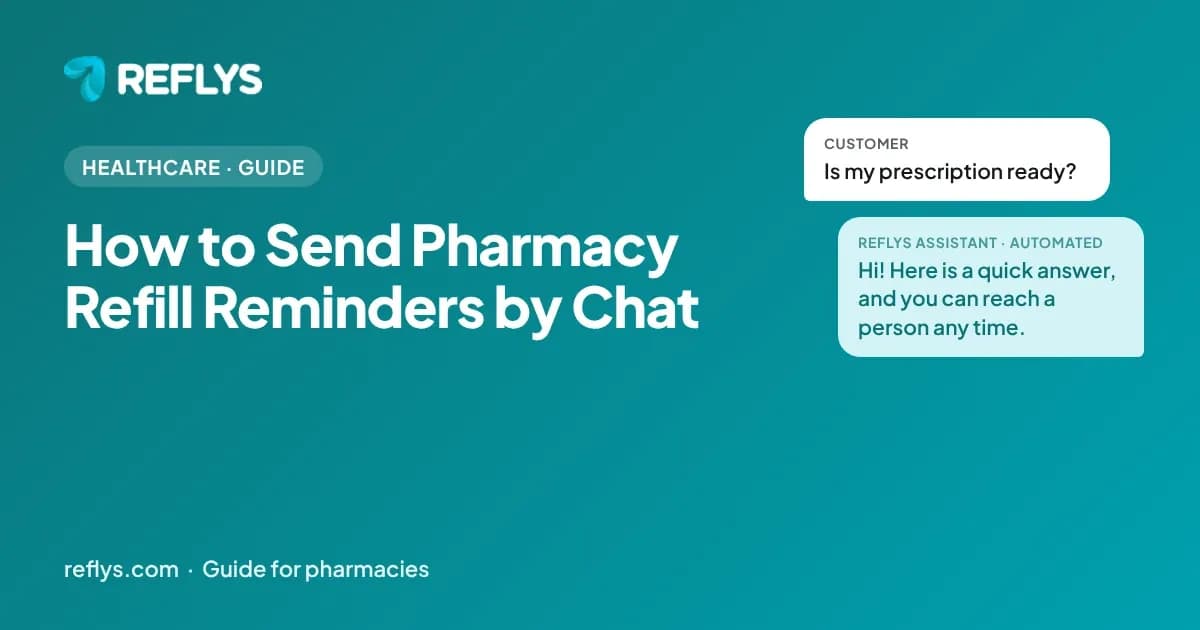
To send pharmacy refill reminders, say only that a refill is due or ready, link to your secure refill page and let patients reach the pharmacist; leave medication names, doses and conditions out of the message. Pharmacy messages are health information, so check your setup with your privacy officer. This guide covers refills, status and transfers.
What should a refill reminder say?
That a prescription is ready or due, with pickup hours and a secure link. No drug names or conditions.
Let patients choose how they are contacted and opt out. Time reminders around the supply remaining, and send one follow-up at most.
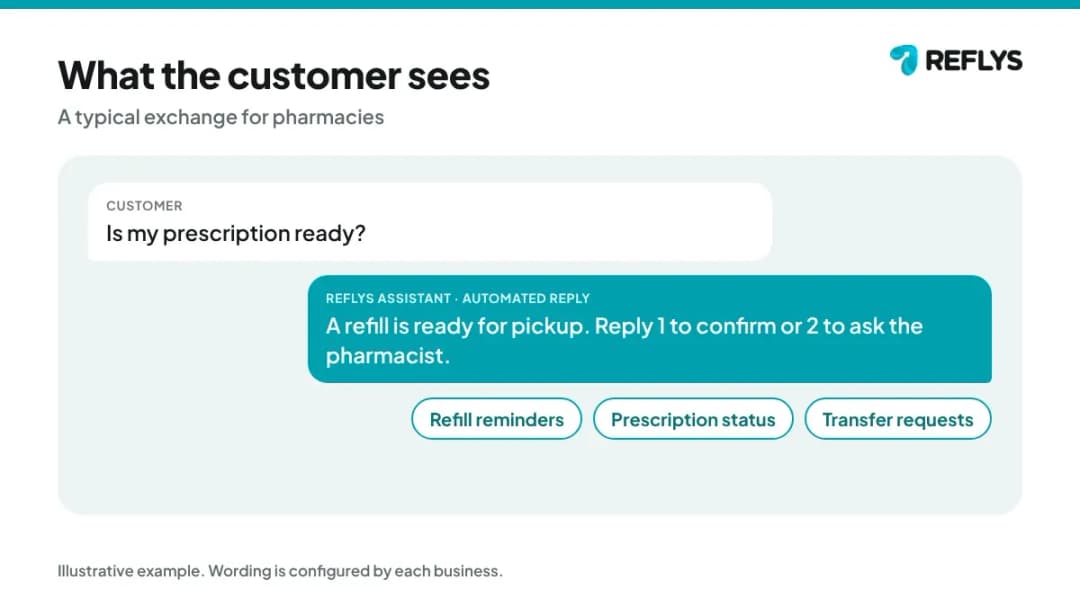
How do you handle prescription status questions?
Tell the patient only the status, such as received, filling or ready, after verifying identity through your secure system.
Verification matters, so use a code or portal login. Questions about the drug itself go to the pharmacist. The FDA's BeSafeRx resource helps patients spot safe online pharmacies.
How should transfer requests work?
Collect the new and old pharmacy details and the medication through a secure form, and let a pharmacist confirm.
Do not accept medication details by open chat. The pharmacist completes the transfer according to your policies and state rules.
What problems does chat automation solve for pharmacies?
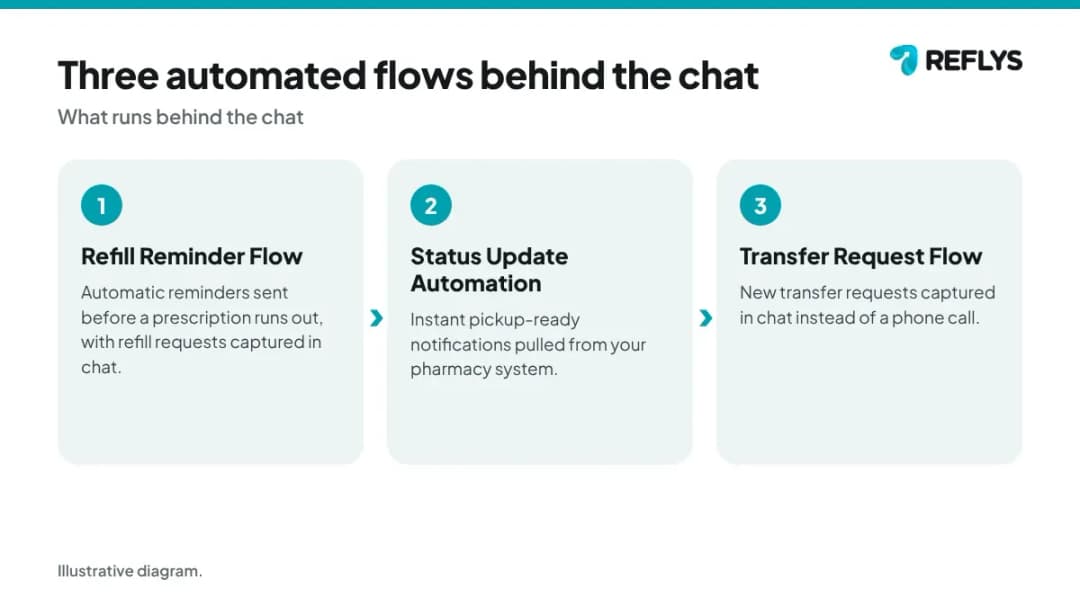
It takes the repetitive, factual first replies off your team: refill reminders, prescription status, transfer requests.
Refill reminders depend on a patient remembering to call before running out. “Is my prescription ready?” messages repeat throughout the day. Transfer requests from another pharmacy get handled one phone call at a time.
What must pharmacies decide before using chat at all?
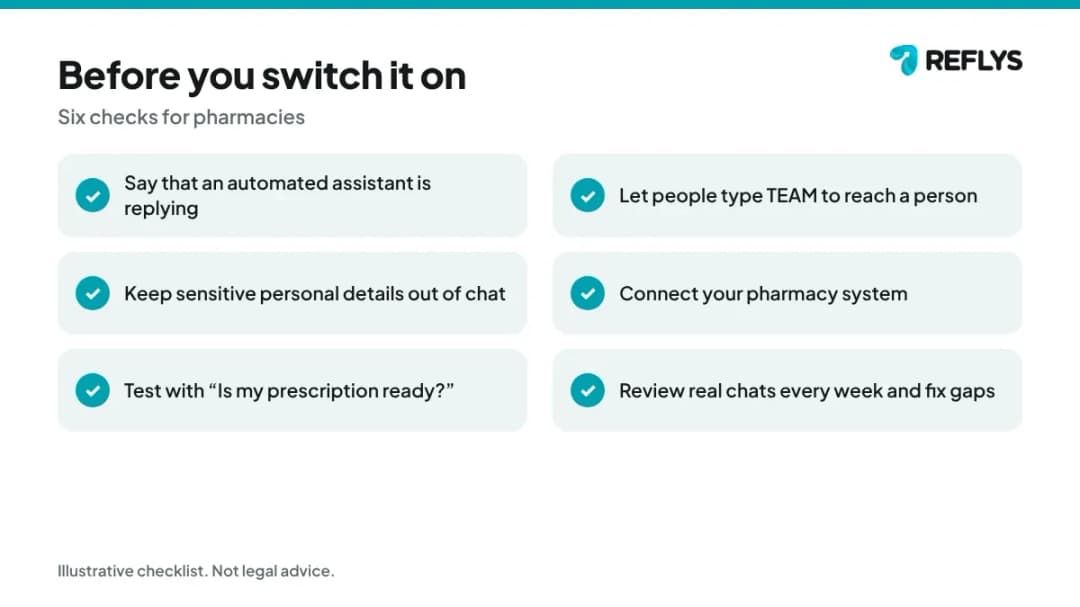
Decide first what the chat will never handle. Use it for logistics such as hours, directions, forms and reminders, keep sensitive personal details out of it, and have your compliance lead or attorney approve every flow before launch.
Keep drug names, doses and conditions out of chat messages. Primary sources worth reading before you build: Summary of the HIPAA Privacy Rule (U.S. Department of Health & Human Services), BeSafeRx: Your Source for Online Pharmacy Information (U.S. Food & Drug Administration), and WhatsApp Business Messaging Policy (WhatsApp). Chat does not replace professional judgment, and nothing in this guide is legal, medical, tax or financial advice. Rules change, so confirm current requirements with your own advisor before launch.
How do you know the automation is working?
Track first-response time, the share of conversations resolved without a person and the reasons conversations were handed over. Review a sample of real chats every week.
Start with a baseline from your last month of messages, then change one flow at a time so you can see what helped. The most useful list is the questions the chat could not answer: each one is either a gap in your answers or a case that should stay with a person. For pharmacies, watch these topics first: refill reminders, prescription status, transfer requests.
How do you try this on your own account?
Start the 7-day trial at app.reflys.com: a card is required and you are not charged until day 8. You can build and test your first flow on your own account before any customer sees it.
Pro starts at $12 a month and suits one person answering messages; Business adds team seats and assignment. If you would rather see it first, book a demo and we will walk through your own questions.
Related guides
- How to use whatsapp messaging in a healthcare practice
- How to automate dental recall reminders
- How to handle waitlists for a therapy practice
Sources
- Summary of the HIPAA Privacy Rule — U.S. Department of Health & Human Services
- BeSafeRx: Your Source for Online Pharmacy Information — U.S. Food & Drug Administration
- WhatsApp Business Messaging Policy — WhatsApp
About this guide: written by the Reflys Team from Reflys product documentation and the public sources above. It describes general practice and does not report customer results. It is not legal, medical, tax or financial advice.