
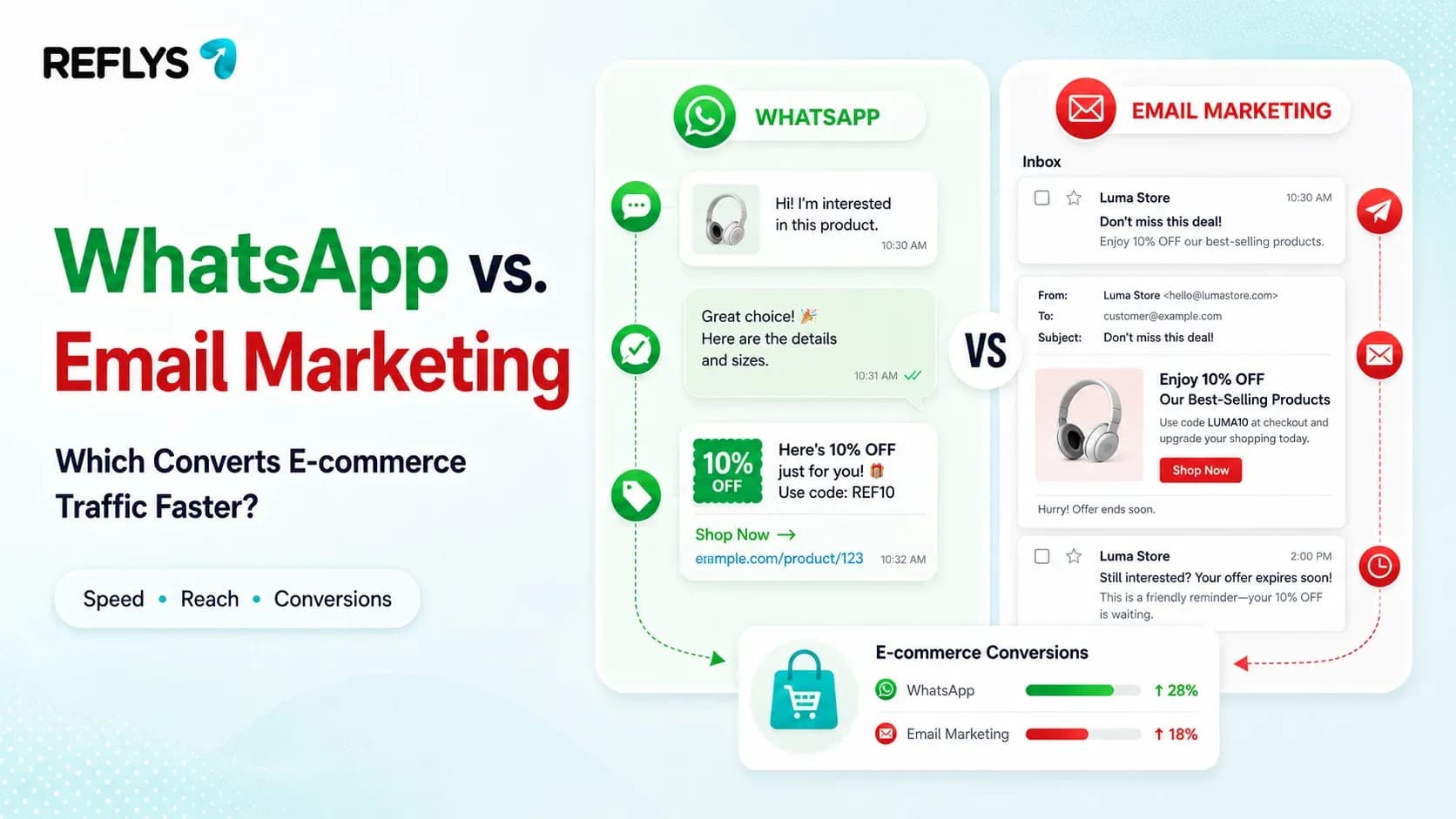
You spend heavily on paid ads to drive shoppers to your Shopify or WooCommerce store. They browse, they load up a cart, and then—they leave. You trigger the standard automated email. It lands in their Promotions tab, buried under 40 other newsletters, and your conversion window closes.
If this sounds familiar, you are likely looking at the gap between traditional email marketing and the immediacy of WhatsApp.
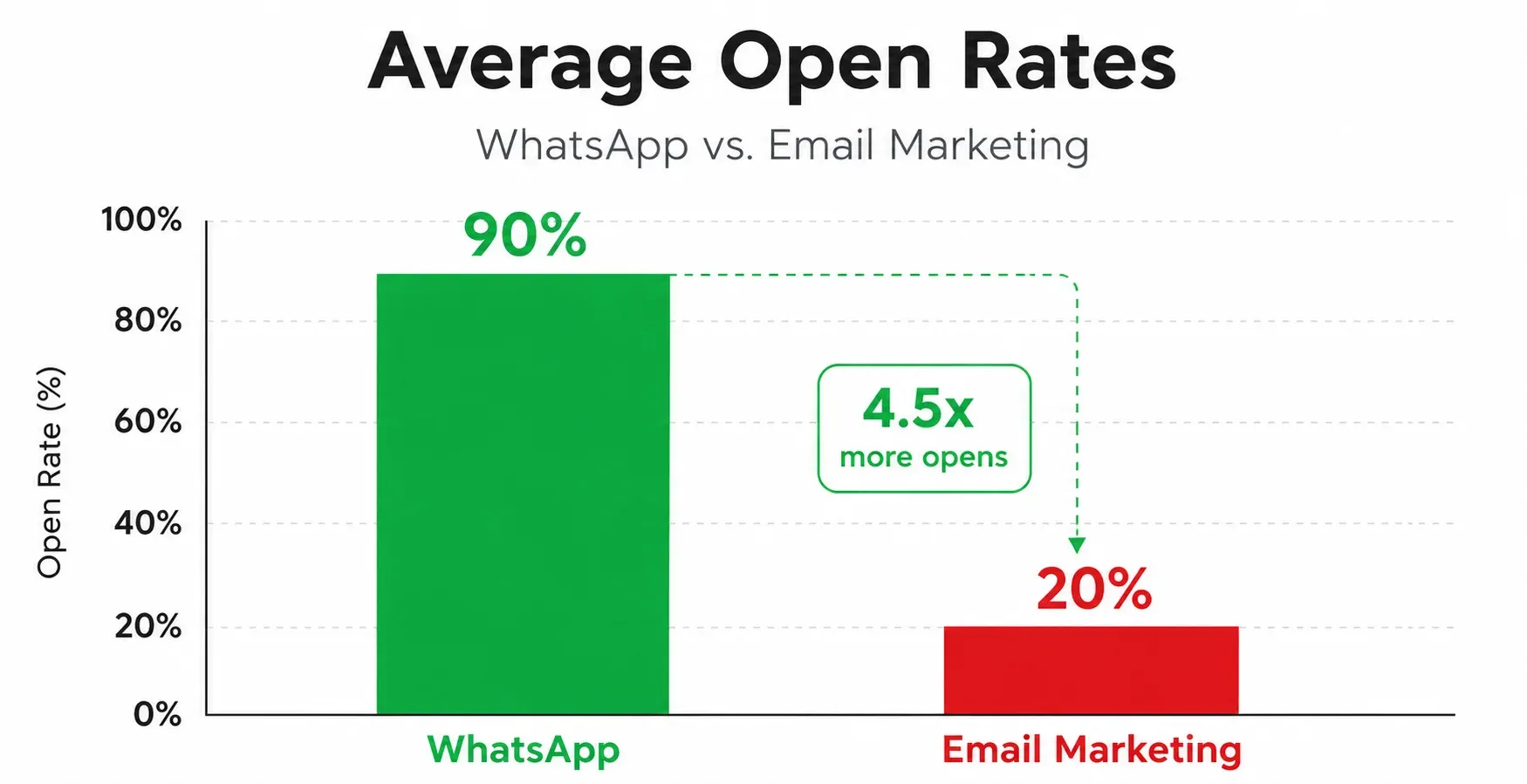
WhatsApp marketing uses short-form, high-urgency direct messages to achieve ~90% open rates, ideal for instant conversions and cart recovery. Email marketing delivers visually rich, long-form content with ~20% open rates, making it better for newsletters and catalogs. The highest-converting e-commerce strategy layers both.
Here is the exact data on how these two channels compare, where each wins, and how to wire them together to stop losing revenue to slow replies using smart whatsapp automation
The Data That Matters: WhatsApp vs. Email
When evaluating these channels, look at how your customers actually behave on mobile. Shoppers check email in batches. They check WhatsApp notifications instantly.
| Metric | WhatsApp Marketing | Email Marketing |
|---|---|---|
| Average Open Rate | 80% – 95% | 15% – 25% |
| Response Time | Minutes | Hours or days |
| Best E-commerce Use Case | Cart recovery, order updates, flash sales | Monthly newsletters, product catalogs, deep dives |
| Cost Structure | Per-conversation pricing (Meta API rules) | Volume-based pricing (per 1,000 sends) |
| Opt-in Requirement | Strict active opt-in required by Meta | Standard CAN-SPAM / GDPR checkboxes |
(Note: The exact fastest way to test this difference for your store is to set up a single WhatsApp flow.)
Why Email Marketing Still Has a Job?
Competitors in the chat automation space often claim email is dead. It isn't. It just has a different job in your conversion funnel.
Email excels at visual storytelling. If you run a seasonal apparel drop and need to show high-resolution lookbooks, email gives you the canvas for that. It is also the undisputed standard for complex transactional records, like detailed receipts, return policy PDFs, and shipping manifests.
But email fails at urgency. When a customer abandons a $150 cart, you have a narrow window to pull them back before they buy from a competitor. Waiting six hours for them to check their inbox is a losing strategy. By integrating structured email automation workflows alongside your instant messaging triggers, you can handle everything from nurturing long-term brand loyalty to capturing immediate, high-intent conversions.
Where WhatsApp Marketing Wins: The Cart Recovery Engine?
According to the Baymard Institute, nearly 70% of e-commerce carts are abandoned. WhatsApp is built specifically to recover them.
Because WhatsApp push notifications sit on the lock screen, your message is seen immediately. A simple text—"Hey, you left the Summer Kit in your cart. Use code SAVE10 to finish checking out"—paired with a direct checkout link, cuts through the noise.
We see this impact across industries. For example, a Reflys travel agency clientincreased booking inquiries by 3x simply by moving high-intent conversations out of sluggish channels and into automated social media messaging.
The Omnichannel Advantage
You don't have to choose. The highest ROI comes from using both channels based on user behavior:
- Minute 15: Send a WhatsApp cart recovery reminder.
- Hour 24: If they haven't purchased, fallback to a visually rich email showing the exact items left behind.
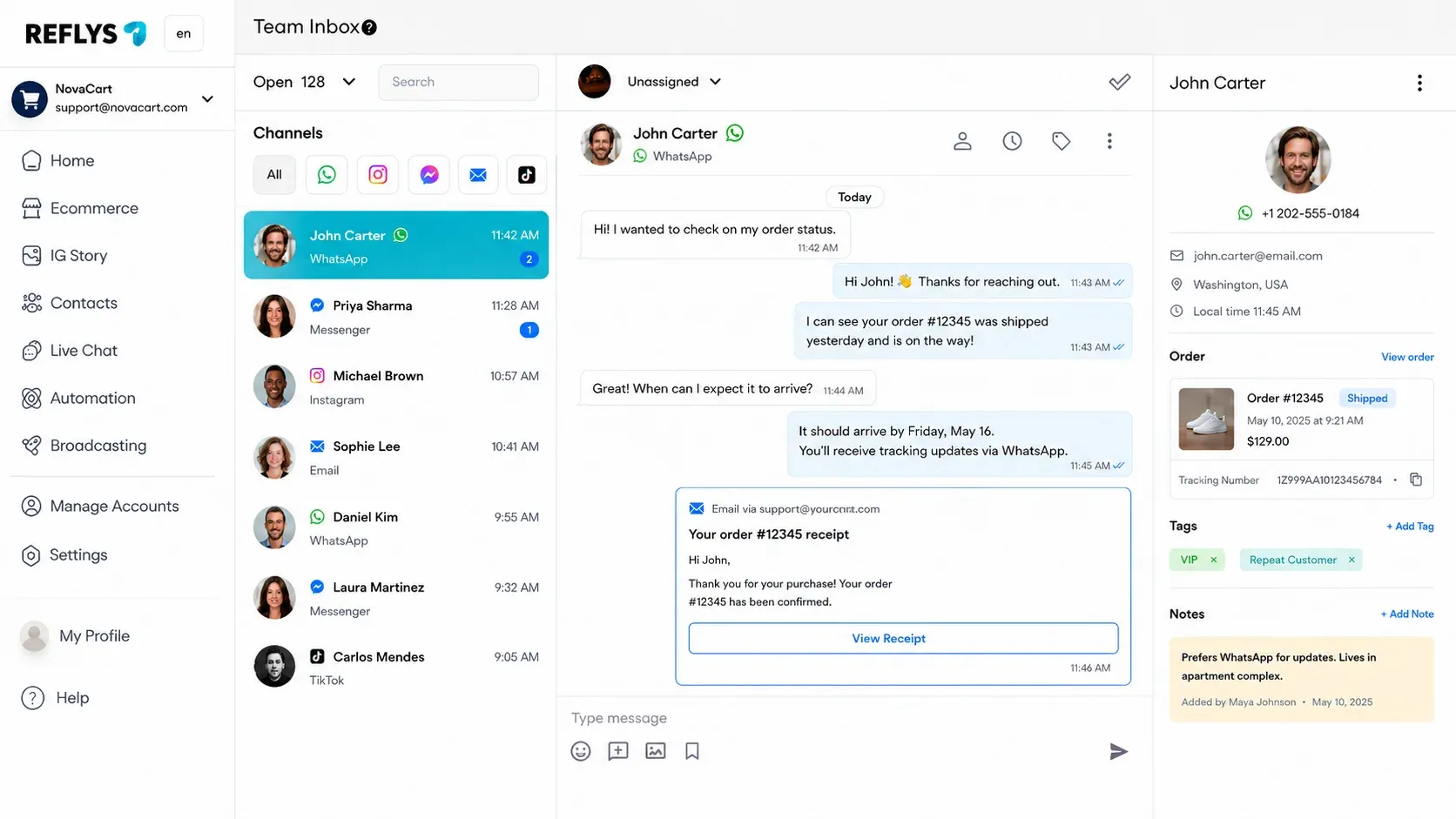
Reflys connects your store to both. You can wire a WhatsApp trigger alongside your email sequences from one dashboard.Start your 7-day trial.
The Ban Risk: Why Official APIs Matter
A critical warning for store owners: if you decide to try WhatsApp marketing, never use gray-market scraping tools or unofficial bulk senders.
Meta strictly enforces its anti-spam policies. Unofficial tools risk permanent bans for your business number. Reflys is built entirely on the official Meta and WhatsApp Business APIs. You get full compliance, approved message templates, and zero ban risk.
Set This Up in Reflys in Under 10 Minutes
You can launch a fully compliant WhatsApp cart recovery flow right now. Two of these steps work even if you just do this manually, but automation secures the revenue while you sleep.
- Add a click-to-WhatsApp link to your store. Give buyers a fast way to ask pre-sale questions directly from your product pages.
- Connect your WhatsApp Business number. Inside Reflys, link your official WhatsApp channel (this takes two clicks and secures your API access).
- Sync your Shopify or WooCommerce store. This allows Reflys to track checkout events.
- Create an Abandoned Cart Trigger. In the visual flow builder, select "Checkout Abandoned" as your starting point.
- Draft your template. Write a short message containing the [Checkout URL] variable. Submit it for fast Meta approval.
- Set the delay. Tell the flow to wait 30 minutes after abandonment before sending.
It takes about 10 minutes to wire up, and you don't need a credit card to test it.
The Final Verdict
Email marketing isn't dead—it's just too slow for abandoned carts and urgent sales. WhatsApp gives you the speed and the 90% open rates needed to recover revenue before the buyer leaves your ecosystem.
Stop losing sales to the Promotions tab. Build your first WhatsApp cart recovery flow today.